 The Frame and Focus
The Rule of Thirds: Transforming Your Photography Through Composition Techniques
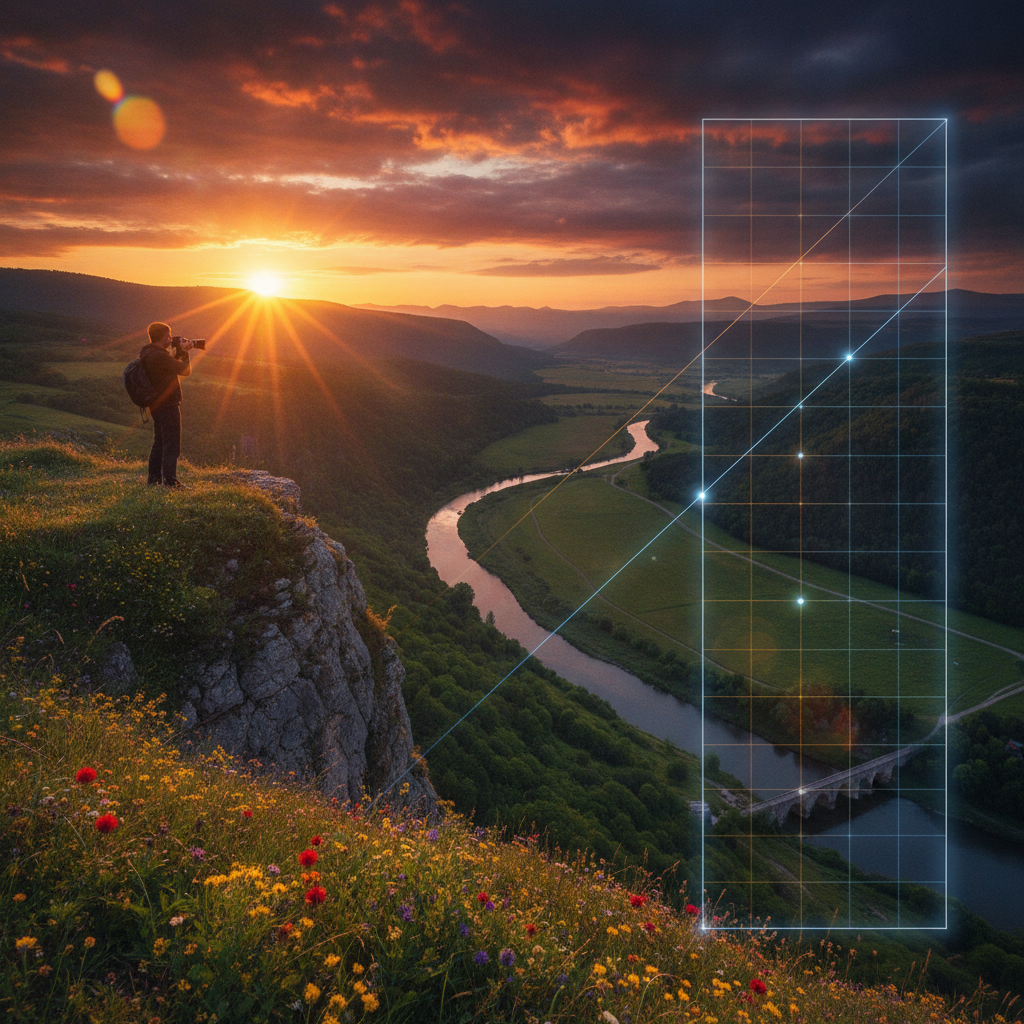
The Rule of Thirds and Beyond
When it comes to photography, composition is key. A well-composed photograph can evoke emotion, tell a story, and capture the viewer's attention. One of the most foundational concepts in composition is the Rule of Thirds, but there are several other techniques that can also elevate your images. Understanding these principles can transform not just how your photos look, but also how they resonate with those who view them.
The Rule of Thirds suggests that by dividing your image into three equal parts both horizontally and vertically, and placing your subject along these lines or at their intersections, you create a more balanced and engaging photo.
Mastering the Rule of Thirds
To apply the Rule of Thirds, imagine your frame divided into nine equal sections by two vertical and two horizontal lines. Instead of centering your subject, position it along one of these lines or at the points where they intersect. This simple adjustment creates tension and interest, drawing the eye into the composition.

Leading Lines: Guiding the Eye
Another powerful compositional technique is the use of leading lines. These lines can be roads, pathways, or even elements like rivers or fences. They guide the viewer’s eye through the photograph, often leading to the main subject. Utilizing leading lines can add depth and a sense of direction to your images.
When leading lines converge at a point, they create a natural focal point, which can enhance the narrative of your photograph.
Framing: Creating Context
Framing is a technique that involves using elements within the scene to create a 'frame' around your subject. This can be achieved with overhanging branches, windows, or architectural features. Framing not only highlights the subject but also adds layers to the image, providing context and depth.
Symmetry and Patterns: Finding Balance
Symmetry and patterns can bring a sense of harmony to your photos. When elements in a scene mirror each other, it creates a pleasing visual effect. Look for symmetrical patterns in nature, architecture, or everyday objects; they can transform an ordinary moment into an extraordinary composition.
Utilizing symmetry can also evoke strong emotional responses, as our brains are naturally drawn to balanced compositions.
Experimenting with Perspective
Lastly, changing your perspective can yield stunning results. Rather than shooting from eye level, try different angles—high above, low to the ground, or even from a side view. This experimentation can reveal unexpected compositions and unique storytelling opportunities, turning a simple scene into a compelling photograph.
In conclusion, while the Rule of Thirds is a foundational principle in photography composition, exploring various techniques such as leading lines, framing, symmetry, and perspective can significantly enhance your photographic storytelling. Embrace these strategies to transform your photos from ordinary to extraordinary.